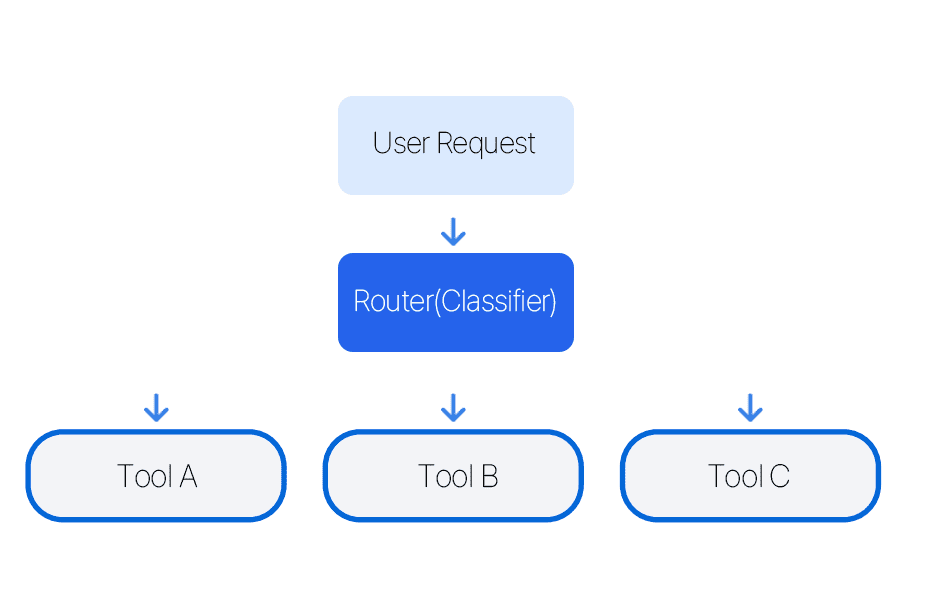
2. Intelligent Routing
Definition
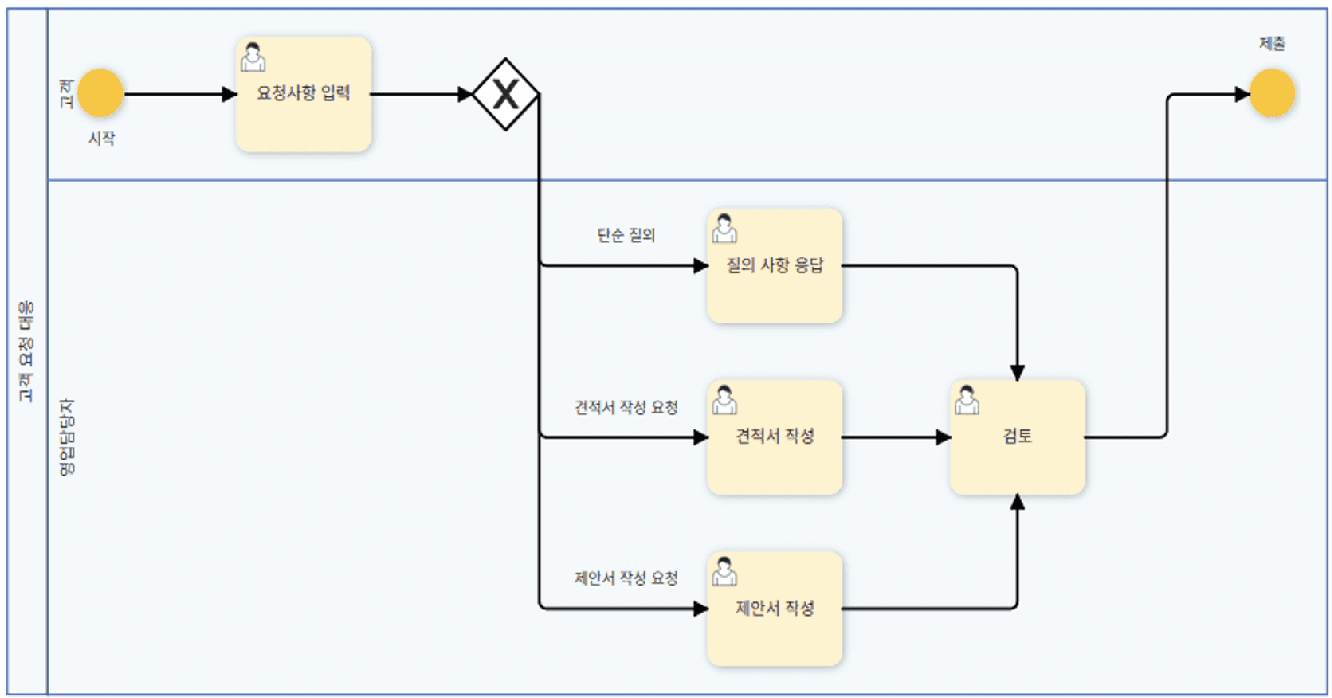
A pattern that branches and distributes work to the optimal path according to the request among various agents/tools.
It plays a key role in multi-agent systems and orchestration.
Key Features
- Intelligent Distribution : Selection of the optimal agent/tool through input analysis
- Conditional Logic : Decision-making based on input type or content
- Multi-stage Filtering : Hierarchical routing structure for complex task classification
- Efficiency Enhancement : Optimally utilize the strengths of specialized agents/tools
Framework Support
- LangChain, LangGraph, Google ADK support routing.
Implementation Method
- LLM-based Routing: Category classification of natural language input (e.g. order lookup, technical support, etc.)
- Embedding-based Routing: Matching to the appropriate path using semantic similarity
- Rule-based Routing: Decision-making based on explicit rules/conditions
- Machine Learning-based Routing: Specifying the optimal path based on a trained classifier
Routing Structure
Simple Implementation Example